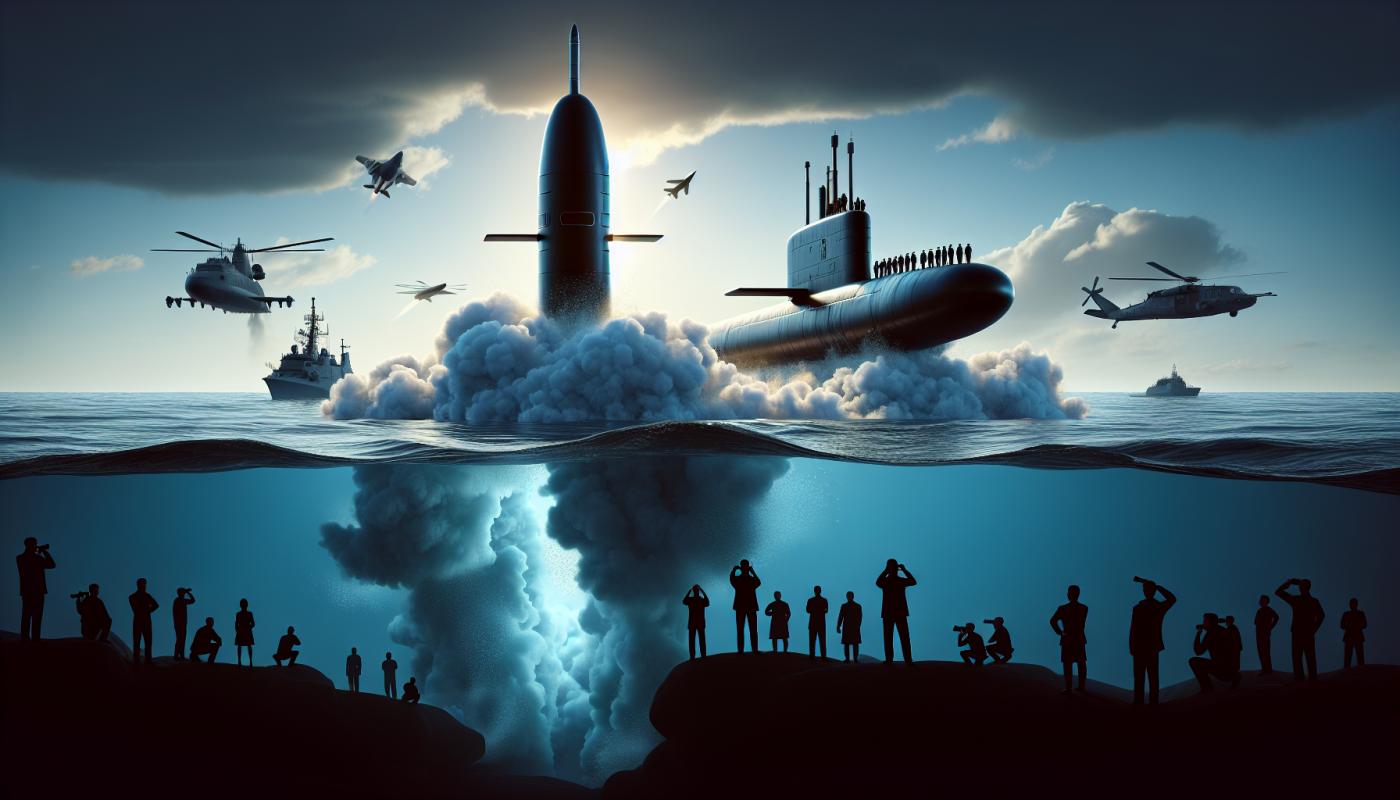
India is set to test a 500-kilometer range Submarine Launched Cruise Missile from its east coast. The SLCM, developed by the Defense Research and Development Organization (DRDO), will likely be fitted on indigenously manufactured conventional submarines (SSK) planned by the Indian Navy under Project 75 India.
SLCMs would give India a sea-based delivery system for tactical nuclear weapons, although India’s nuclear posture focuses on strategic-level second-strike capability rather than tactical battlefield use.
Project 75 India, also known as the Kalvari-class SSK, is a French-designed Scorpene SSK of which India has five and plans to have nine in service.
India’s new SLCM has two variants: the Land Attack Cruise Missile (LACM) and the Anti-Ship Cruise Missile (ASCM). Both feature technologies like thrust vector control, in-flight wing deployment and in-flight engine start.
The SLCM is also expected to be sold to friendly countries after being thoroughly tested and inducted into the Indian military.
Its capabilities are similar to the Nirbhay ground-launched cruise missile (GLCM), which has a 450-kilogram payload and an 800-1,000 kilometer range, according to Missile Threat.
Here are the top political news stories for today.
I once heard a talk from a State Department official that covered a wide range of topics, from the growing might of China, the rumblings of Russia, and the threat of terror coming from the Middle East. But during the Q&A, when asked about where he thought the most destructive problem was, without hesitation pointed to the Indo-Pakistan border.The problem is that these people have been at each other's throats for as long as their leaders have been alive, and while even France and Germany have learned how to get along, the Pakistani government seems to justify its existence by always… Read more
Wasn't that the war that separated "East Pakistan" from the bulk of the country and turned it into the independent nation of Bangla Desh?I remember it, but it was over in a few days as India aided a rebellion in East Pakistan, which could not hope for support from the other part of Pakistan with India sitting smack in between the two parts.Subdividing the Indian subcontinent into East Pakistan, West Pakistan, and India in between the two parts, wasn't one of the British Empire's better brainwaves.
@DovesBellaLibertarian2yrs2Y
So let's say India carries out a first strike against Pakistan, and actually succeeds in destroying Pakistan's nuclear arsenal. Where does the fallout go? Nuclear arms races are never a good idea, and this one seems particularly illogical. Pro tip: nobody wins in a knife fight fought with nukes.
@PeacefulLibertyPatriot2yrs2Y
And as for Pakistan's idea of using tactical nukes to repel an Indian invasion -- yeah, right. Nukes are a very inefficient way of attacking troops dispersed in the field. To have any significant effect on an Indian invasion over a broad front, Pakistan would either have to use dozens of nukes on its own territory, or hit more concentrated, high-value targets like air bases, logistical hubs, and follow-on forces on the Indian side of the border. Doing the latter would ensure Indian retaliation in kind, in an environment where there are civilians, large numbers of them, everywhere.
@ISIDEWITH2yrs2Y
@ISIDEWITH2yrs2Y
Join in on more popular conversations.