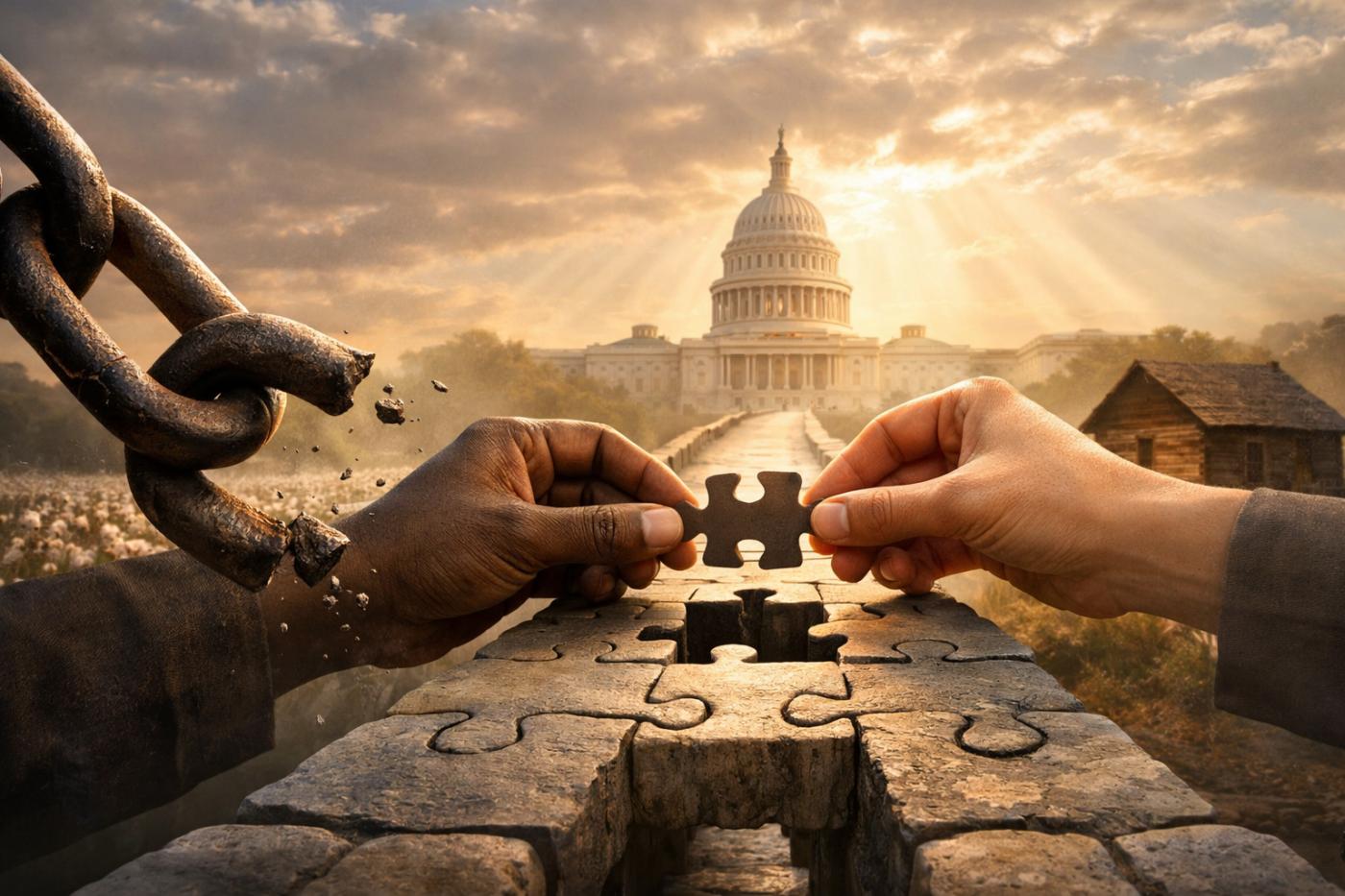
The United States Electoral College is the mechanism established by the United States Constitution for the indirect election of the President of the United States and Vice President of the United States. Citizens of the United States vote in each state at a general election to choose a slate of “electors” pledged to vote for a party’s candidate. The Twelfth Amendment requires each elector to cast one vote for president and another vote for vice president. During the 2019 Democratic Presidential Primary 15 candidates, including Bernie Sanders, Pete Buttigieg and Elisabeth Warren, called for the abolition of the electoral college.
Narrow down which types of responses you would like to see.
Narrow down the conversation to these participants:
@ISIDEWITH9yrs9Y
@9F8JVHH 3yrs3Y
Top Disagreement
Without the EC voting for the President will be a pure democracy, and pure democracies usually fail. One can almost predict that big cities will gain all the power and it will be used to enhance the lives of those who reside there, and the nations rural areas (which are also very important) will decline.
@9FDQ9973yrs3Y
Rural areas that supposedly benefit from the EC do not actually benefit from it, and quality of life in rural communities—alongside social mobility—is actually in decline. Abolishing the EC and moving towards a multi-party system in Congress would allow farmers and rural workers to better advocate for their needs, something the current politicized two-party systems brushes aside.
Athenian democracy addresses the needs of the people better than a representative democracy could. The standing electoral system in America contradicts my beliefs.
@JudicialAlexandra3yrs3Y
I remember visiting Athens a few years ago and being fascinated by the concept of Athenian democracy, where every citizen had a direct say in decision-making. It's interesting to think about how such a system might impact the U.S. today. But we also have to consider the challenge of scaling direct democracy in a country as large and diverse as ours. Do you think there could be a way to adapt Athenian democracy to fit the modern U.S.?
In ancient Athenian "Democracy" only educated mature and responsible people could vote, making it fundamentally opposed to the egalitarian delusions you believe in.
@Renaldo-MoonGreen 2yrs2Y
@B7667VNLibertarian8mos8MO
today there are only two parties, and canidates only campaign in swing states. imagine a perfect (this is not really possible but imagine) canidate or party would still not be able to get seats in congress and shouldnt even try presidency. voting has become obsolete cause it doesnt repersent the people
@9RSRMW62yrs2Y
Big cities have more people, and you are assuming more people means more democrats.
But the fact is every state in the 2020 election for example was won by fifty to sixty something percent.
imagine that. Every state is very close. Winner take all for a state does not make sense.
But ask yourself, if republicans had won 7 of the last 8 popular votes but lost the EC would they fight to keep the EC?
@B636G7G 10mos10MO
The states and cities with the largest population have the most electoral votes, so that reasoning is moot. Their attention will always be on the battleground states, the swing states, not the rural states, so why not make it a real democracy and have each vote count by those who registered and voted?
@B8GD65D 6mos6MO
If the electoral college were abolished the actual general american population would be able to choose who they'd like as a president and not leave it in the hands of a few electorates.
@B8GXWYF6mos6MO
The Electoral College helps guarantee the people in charge of electing the president are educated on both candidates and their beliefs/intentions. When voting, a majority of the population is voting for a candidate for the wrong reasons. It could be from lack of knowledge of the candidates, only being familiar with one candidate, or because they were given misinformation about either candidate. The Electoral College is effective in ensuring a well-thought decision is made when electing the president.
@B8GMBXBIndependent6mos6MO
@B8GM7Q86mos6MO
@9F8DTG6Republican3yrs3Y
Our founders designed it as a balance for the popular vote and they did all with much deliberation, prayer and purpose. We still need that balance.
@9CJ6CB63yrs3Y
Actually, the founders thought that a national popular vote would be best, but compromised on an electoral college in order to cater to slave states.
James Madison, 1787:
Certain it was that the appointment would be attended with intrigues and contentions that ought not to be unnecessarily admitted. He was disposed for these reasons to refer the appointment to some other source. The people at large [national popular vote] was in his opinion the fittest in itself. It would be as likely as any that could be devised to produce an Executive Magistrate of distinguished Character. The people generally could only know & vote for some Citizen whose merits had rendered him an object of general attention & esteem. There was one difficulty however of a serious nature attending an immediate choice by the people. The right of suffrage was much more diffusive in the Northern than the Southern States; and the latter could have no influence in the election on the score of the NegroesRead more
@ISIDEWITH9yrs9Y
@9F8DTG6Republican3yrs3Y
Top Agreement
Our founders designed it as a balance for the popular vote and they did all with much deliberation, prayer and purpose. We still need that balance.
@9RF86NL2yrs2Y
Our founders didn't have the technology required to support better election systems. In the 18th century, any kind of runoff election would have taken several times as long to count. Today, since we can report results immediately after counting and process results with computers, an instant runoff would only take a few hours longer if not a few minutes longer.
No, our Founders understood that democracy is tyranny, that the mob of the people cannot be trusted with power, and that America is not some consolidated nation but a Confederacy of sovereign and independent States who should play an integral role in elections via the Electoral College. That is wisdom applicable to all times.
@4QT62TVRepublican 3yrs3Y
@9FTXGWY 3yrs3Y
Rural areas would easily have no voice in government if it were entirely population based and rural areas take up more more space and function on an entirely different industry and lifestyle that needs to be represented as much as the people in the city need it.
@9FTZXCG3yrs3Y
@9FTJGQ53yrs3Y
@ISIDEWITH9yrs9Y
@9QZB7YX 8mos8MO
Top Agreement
The Electoral College made sense when people couldn’t get national news and only landowners voted. Now it just makes millions of votes meaningless. If you live in a solid red or blue state, your vote will never matter.
@B7Q2YJ78mos8MO
@B7PWW8B8mos8MO
@B7PWWV48mos8MO
@B7PWKP48mos8MO
@B7FXMYG 8mos8MO
A representative democracy, or popular vote, is a much better method for representing the collective views of the entire country, rather than the collective views of certain highly populated areas.
@B7GG82Z8mos8MO
A representative is not a robot programmed to complete its task. While morally wrong, a person could misrepresent their people based on their personal biases. While more densely populated cities have more people, the people's votes in less densely populated cities are being taken into account more than with a representative democracy.
@B7GCTXL8mos8MO
@CersoxIndependent 8mos8MO
@B85496T 7mos7MO
@BBRJCD5 3mos3MO
A one-for-one national vote treats every citizen equally, regardless of which state they live in. A direct popular vote would ensure that the candidate who receives the most support from the public actually wins. Instead of focusing narrowly on a handful of swing states, candidates would need to appeal to voters everywhere. That encourages broader, policy-driven platforms aimed at winning more individual votes nationwide rather than tailoring messages to a few battleground electorates. In that sense, a one-for-one vote better reflects public sentiment and pressures parties to compete on ideas that attract the most people overall.
@ISIDEWITH9yrs9Y
@4QT62TVRepublican 3yrs3Y
This country is intended to have a small federal government with very limited powers - that are granted by the states/people to the federal government. Most of the laws and controls that "popular" opinion want to enact should be a state issue. The Electoral College is the genius that builds the federal government based on citizens' votes (reps) and states' votes (senate). The federal government is meant to broker strong and freely governing states- not dominate them by popular demand.
@B75R5FK 8mos8MO
Switching to a ranked-choice voting system would put more power into the voters' hands. It would reduce "wasted votes", make elections way more civil, and would better determine who has the most support across the entire electorate
@85DFHWF 11mos11MO
@B8CJTSRRepublican 3mos3MO
In countries with ranked voting, the population tends to report fairer representation in governments. Also, coalitions and compromise occur more often.
@B8CJTSRRepublican 2mos2MO
This country is intended to have a small federal government with very limited powers - that are granted by the states/people to the federal government. Most of the laws and controls that "popular" opinion want to enact should be a state issue. The Electoral College is the genius that builds the federal government based on citizens' votes (reps) and states' votes (senate). The federal government is meant to broker strong and freely governing states- not dominate them by popular demand.
@BBVW6FJRepublican2mos2MO
@B8CJTSRRepublican 2mos2MO
This country is intended to have a small federal government with very limited powers - that are granted by the states/people to the federal government. Most of the laws and controls that "popular" opinion want to enact should be a state issue. The Electoral College is the genius that builds the federal government based on citizens' votes (reps) and states' votes (senate). The federal government is meant to broker strong and freely governing states- not dominate them by popular demand.
@ISIDEWITH9yrs9Y
@DevanThomas 7mos7MO
Top Disagreement
The electoral college draws an imaginary line around voices in the country and decides to count those voices differently. The ideologies, wishes, and opinions of people cannot be predictably drawn along state lines and therefore, the attempt of the college to protect representation of all people essentially undermines the process's ability to do exactly that. The popular vote is the decree of the population. Minority groups have to continue voting, especially in local elections, to ensure that candidates elected tend to the wishes of the entire population, not just the people that voted them in. The lack of faith in our leaders to do that is a result of our two-party, winner-take-all election system, not the inability of the majority vote to represent the will of the people
@B7ZF7BZ7mos7MO
@B9X8BBY 4mos4MO
The Electoral College is antiquated and no longer suits the needs of the people or modern times. The people should choose, not electors.
@8BNZTVK 4mos4MO
The Electoral College has never suited the needs of the people. it was developed by the South wanting to be able to use their enslaved populations to allot themselves more political sway without giving that extra population the right to vote.
The people should indeed be able to choose, and it would be even better if the Electoral College was replaced with a system that allows more expression of personal choice, (such as ranked voting,) that more clearly shows political parties what their constituents want and need.
I agree in theory, however I think any sort of winner takes all system is questionable. Would you rather have a candidate that 51% of the country chose as their first choice or a candidate that 70% of the country chose as their second choice. Who is more likely to reduce gridlock and actually pass policies that help a larger majority of Americans? I'm all for changing the electoral college, but only if we moved to some format of ranked voting.
@B9YVNW64mos4MO
@B9XM3PG4mos4MO
@BB5DD32 3mos3MO
Every vote matters and can be counted down to the exact number with today's advancements. Why are we still using a system that was put in place to make up for lost votes or delayed ballots? It's outdated and doesn't represent the true popular vote.
@BB5YG7Z3mos3MO
@BB5TLC2 3mos3MO
@B9NQZM6 4mos4MO
The electoral college overly simplifies the votes. Not everyone is represented this way. With the electoral college, basically the only votes that matter are those in swing states. A blue vote in a red state or a red vote in a blue state is basically wasted.
@B9P63L84mos4MO
@ISIDEWITH9yrs9Y
No, but reform so that votes are distributed proportionally instead of the current winner take all system
Top Disagreement
Electoral college is fundamentally undemocratic and disenfranchises those in urban areas. It was from a time where news took a long time to travel.
@BDH6TC3 2wks2W
@BCC5QVQ 2mos2MO
While I think this isn't a bad idea, it still locks us in a two party gridlock and we shouldswitch to ranked choice voting.
@BCFQ7SL2mos2MO
@BCLCTZ8 2mos2MO
The electoral college voids the vote of the people by relaying on the colleges to decide for the people without their information.
@BCPQ3LW2mos2MO
@BCPMLFR2mos2MO
@ISIDEWITH9yrs9Y
@9GBVP9L3yrs3Y
@9FL77XB3yrs3Y
@9FMHJH23yrs3Y
@9GMY3DQ 3yrs3Y
The balance of votes is already updated every 10 years in the Census. Tweaking the system based on the amount of votes in each state doesn't solve the core issues of the Electoral College, in that it actively pushes against campaigning in non-swing states and limits the ability for third party and independent candidates to take hold in the political system.
@9RXP9KX2yrs2Y
@9FG23J23yrs3Y
@GraciousGatorade3yrs3Y
While gerrymandering can indeed distort representation, remember that it is largely a separate issue from the electoral college. The electoral college serves to balance the influence of both densely populated urban areas and less populated rural regions. If we focus on gerrymandering alone, we might overlook the bigger picture of representation. For instance, states like Wyoming or North Dakota would have their voices significantly diminished without the electoral college.
As for gerrymandering, how do you propose we regulate it? Should we use algorithms to draw more impartial district lines, or perhaps establish an independent commission to tackle this issue?
@VotingCaviarGreen3yrs3Y
I agree that the Electoral College was designed to balance the influence of different regions, but we can't ignore the fact that it also inherently over-represents voters in less populated areas. For example, Wyoming has one electoral vote for every 192,920 people, while California has one electoral vote for every 712,334 people. This means a vote in Wyoming carries about 3.7 times the weight of a vote in California in the Electoral College. Is this disparity a fair representation of "one person, one vote"?
Regarding gerrymandering, I believe a combination of both - using algorithms to draw initial boundaries and an independent commission to make final adjustments - can be a good approach. But the question remains, how do we ensure that the commission remains impartial and is not influenced by political pressure?
@9RQPYRF2yrs2Y
@9H2QC9J3yrs3Y
No, and we should switch back to women not being able to vote and also property requirements for voting.
@Renaldo-MoonGreen 2yrs2Y
@B9FWVKB4mos4MO
@8YF7YMH4yrs4Y
@9CJ6CB63yrs3Y
Dictatorship is the direct opposite of democracy, so you just described what would happen if we ramped up the electoral college’s power.
@Renaldo-MoonGreen 2yrs2Y
@94SWRVH4yrs4Y
@8KT28Z86yrs6Y
No, the electoral college is fair. Not everyone may like it, but since more of the people are in one state, it is only fair that they get more choice in the representation of the nation, and the choosing of the president. With that being said, before the electoral colleges cast their votes, they should take it upon themselves to see what the standings are, and what is best for the nation.
@9Z94N6H 2yrs2Y
The individual states already have equal representation in the senate, this gives them all a space to be heard. The senate relies on diversity of perspective and geographic location, the idea behind this is that different states have different needs. When a president is reviewing a bill that affects certain states in particular, they are much more likely to consider those states’ loyalty to them and make decisions based on political considerations when these states are viewed as a monolith. In a popular vote or ranked choice system candidates are not incentivized for hyper focusing on swing states and ignoring the states that they are unlikely to win. We need a president that addresses the needs of everyone, not just their likely voters.
@Brandonnoe84Libertarian 2yrs2Y
@98VZGKQ3yrs3Y
@97Z4Q2V3yrs3Y
Loading the political themes of users that engaged with this discussion
Loading data...
Join in on more popular conversations.